I wrote this article for people who have recently launched a new website (congratulations!) and for those who haven't revisited their existing website or have a much older one that's under-performing.
As I've learned, people can go years without updating their websites
When I'm not creating websites for new ventures, it's often for people in possession of a classic.
Sadly, it's not a classic you'd find in the garage or wine cellar, but rather on the 42nd page of Google.
The reasons are often the same - the previous developer no longer exists or maybe they churn out one website after the next, never returning to existing works or clients.
More than often though, it is that the person who commissioned the website never undertook the ongoing maintenance and marketing a website needs to consistently deliver the best outcome, and eventually it's well out of date and a full (often costly) rebuild is needed.
There's 5 simple things you can do to ensure the ongoing success of your website, prolong the life of your website and avoid falling into a lull where traffic and leads/sales taper off.
You can do these things for free and if you get someone else to, it still pays itself off and generates revenue in the long run. As your website ages, the eventual rebuild is much more cost-effective if the basics have been taken care of on a regular basis.
Launching a website is the start of a new, exciting journey.
You've been working on a website for several months - maybe you built one years ago and it got a little tired so you've started a rebuild.
Finally, you're happy with how it reads, feels, looks and functions. With the new website launched and taken care of, you can leave it for another couple years until it starts to look tired again. Right?
WRONG!
Launching the website is only the beginning of a new (and exciting!) journey.
The vehicle for raising awareness and attaining leads or purchases has been built... but it's in neutral, and it is up to you to grab the wheel and put your foot on the pedal.
The journey towards getting the most out of your website starts now.
Until your website launched, it was still conceptual.
Ideally your designer or developer followed best practices.
They've ensured your website is fast and well-built under the hood. Quality, relevant text has been written for SEO gains and of course, it's all wrapped up in an attractive design.
That's good, but the litmus test begins when your website is shown to the world and people begin visiting and interacting with it.
Get the most out of your website. Here's a five things you should be regularly doing:
1. Pay Attention to Website Traffic
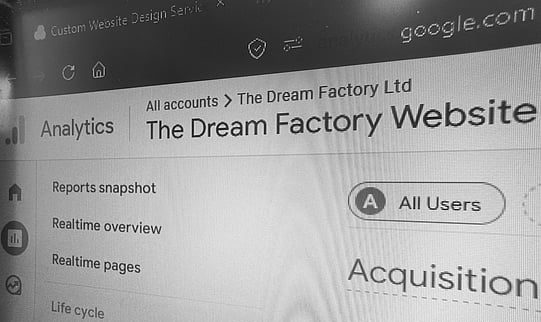
Have a tool in place to monitor your web traffic. Check in and ask the questions:
What pages gather the most and least traffic?
How long are people staying on these pages?
What journey are visitors taking - what page do they land on and where are they when they leave your website?
Where are visitors coming from?
These questions scratch the surface but it's a good start. Website traffic data can be obtained through tools such as Google Analytics, a tool I set up on all my client's newly created websites.
2. Monitor Website Search Performance
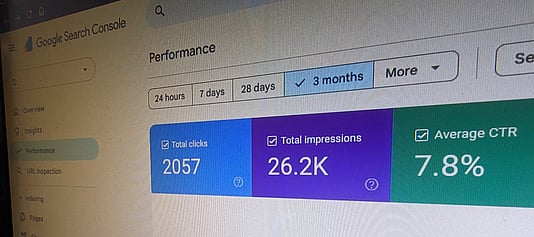
Search performance describes how easily your website is found on search engines such as Google, Bing, Yahoo etc. A few easy things to check include:
How many times is your website seen in search results? (Impressions)
How often do people visit your website after seeing you in search results? (Total clicks; click-through rate).
What is your average position on search engines like Google?
What specific terms have lead to impressions or clicks - could better keywords and phrases be used on the website to gain more exposure?
Have any recent updates to search engine algorithms affected your website's visibility?
Then, of course, there's the ongoing monitoring of this.
One of many tools for assessing your search performance is Google Search Console, which provides insights to the above questions and also can be useful for discovering new keywords, identifying issues affecting your search presence and ensuring your SEO strategy is producing meaningful results.
3. Start Posting and Promoting Your Website via Third Parties
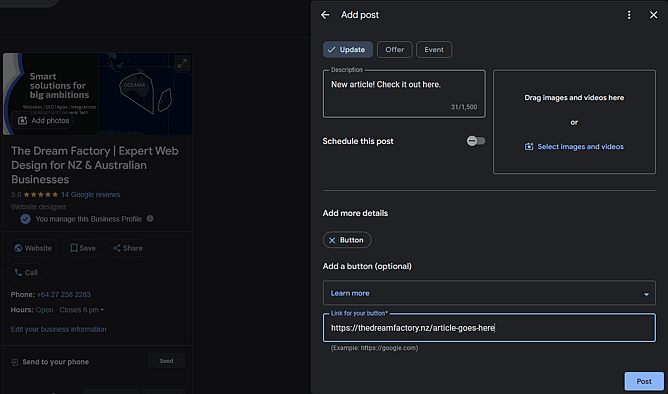
Create a Google Business profile if you haven't already, add your website and start posting links to pages and articles on it. Already have this profile? Ensure it's up to date and you have recent, high-quality reviews (this is often overlooked).
Write content on your website and post links to it via social media - Instagram, Facebook, Google Business.
Not sure what to write? Jump on an AI tool and ask for some topics... just make sure what you're writing is original and authentic otherwise you might do more harm than good. If you're going to copy + paste everything it writes, my advice is don't write anything at all.
4. Stick to It, Respond as Needed and Stay Relevant!
Don't get left behind.
Keep a lookout and seize opportunities for growth and improvement wherever you can!
Consistency is key and by regularly monitoring your website you can address issues promptly and remain competitive.
Check in and ask yourself: "How has my website's position trended over time, why has my traffic dipped over the last couple months, what should I do to ensure I am addressing these changes?".
Stay relevant!
When everything is going fine, ask yourself "How can I grow further and stay ahead?". Often web traffic or rankings slip because a website becomes stagnant - It hasn't kept up with search algorithm changes, it no longer adheres to modern web standards, or your competitors generate online activity on a much more regular basis than you do.
5. Ensure tools to accomplish all of the above have been put in place.
These include:
Google Analytics (web traffic)
Google Search Console (search performance)
Google Business (Posting and promoting website, getting reviews)
When I set these up, they are also automatically set up on Bing search engine (Bing Webmaster Tools; Bing Places for Business) as well - keep in mind Google is not the only search engine people use.
In summary, there's five simple things to get the most out of your website - and the sooner you do them, the better.
The Five Things:
Monitor your web traffic and search performance
Collect relevant, recent reviews
Share your website and its content
Do all of the above regularly, and lastly
Set up the tools to do it if you haven't.
Minus a couple hours of your time each month, it's completely free to do and will pay itself off.
Getting the Benefits ASAP
The sooner this system is in place, the sooner you get the benefits. As a general rule of thumb, I say to clients "What we do today is what will get you where you want to be in 6-12 months time".
I say it because it generally takes time for changes to have an effect on your web presence and to build momentum, particularly if you're a brand new website receiving little to no search traffic.
Whether you have a new or existing website, having this in place as early as possible is good peace of mind. If there's ever a lull in business or "the website seems quieter than usual", you have historical web traffic and search engine data you can fall back on to investigate and find out why.
The alternative is doing this when things have already quietened down - in which case you're acting with urgency and doing it with no historical data to influence your decisions. You're guessing and relying on trial and error first and foremost.
Often a dip in search presence/traffic happens gradually (but not always).
Get Help or Answers
Never Want to Worry About This?
I set up and manage all of this for numerous clients so that they never have to worry about it - in addition to implementing website improvements and changing corresponding to their monthly search console performance.
This ensures clients are always at the top of their game, and any issues affecting their search presence are picked up on early.
As websites age, the eventual rebuild is much more cost-effective, as often the basic SEO and content is okay.
Want to Do it Yourself?
If you have a few questions or get stuck, feel free to reach out. I'm happy to jump on a call for 5 minutes and lend a hand (subject to schedule and availability).

Contact Izaak from The Dream Factory
I work globally, basing myself between Australia and New Zealand.
Phone: +61 466 523 298 | +64 27 258 2283
E-mail: izaak.wicks@thedreamfactory.nz